Should You Upgrade from Hisense U75Qg to Hisense U65Qf?
Choosing between two Hisense TVs is not always as straightforward as moving to the newer-looking model name or assuming a different screen size automatically means a better experience. In the case of the Hisense U75Qg and Hisense U65Qf, the better question is not simply which TV is “best,” but which one fits the buyer’s room, viewing habits, and expectations. For many households, that matters more than any single spec-sheet number.
The title question asks whether someone should upgrade from the Hisense U75Qg to the Hisense U65Qf. On paper, that is an unusual direction, because it suggests moving from a larger, more premium-positioned screen to a smaller model. That means this is less of a traditional upgrade discussion and more of a value and fit analysis. A buyer may be considering the U65Qf because the 75-inch setup feels too large for the room, because the household has shifted from a home theater mindset to a more casual living-room setup, or because gaming and HDR performance are no longer the top priorities.
For buyers trying to decide, the short answer is this: most people should not view the U65Qf as a true upgrade over the U75Qg. It is better described as a downsize or side-grade for shoppers who want a smaller screen, potentially lower cost, and solid everyday performance. However, there are situations where moving to the U65Qf can still make practical sense. The key is understanding what is gained, what is lost, and which differences show up in real-world use.
Hisense U75Qg vs Hisense U65Qf at a Glance
Both models sit in the broad category of 4K quantum-dot style TVs aimed at buyers who want more color, HDR support, and smart TV functionality without jumping into ultra-premium pricing. Both are likely to appeal to shoppers who stream heavily, watch sports, and want a TV that feels modern without becoming overly complicated to use.
That said, the U75Qg is generally the more ambitious product in practical terms. It brings the larger screen experience and tends to be more appealing for people who want a cinematic setup, stronger motion handling, and more advanced gaming support. The U65Qf, by contrast, is easier to place in average rooms and may be a more sensible fit for buyers who mainly watch streaming services, cable, or casual sports and want something more manageable at 65 inches.
Comparison Table
| Feature | Hisense U75Qg | Hisense U65Qf |
|---|---|---|
| Screen Size | 75 inches | 65 inches |
| Primary Appeal | Large-screen immersion, premium home viewing | Balanced size, easier placement, value-focused use |
| Resolution | 4K UHD | 4K UHD |
| Color Technology | Quantum-dot style wide color support | Quantum-dot style wide color support |
| HDR Experience | Typically stronger and more impactful | Usually adequate, but less dramatic |
| Motion / Gaming Potential | Better suited to fast motion and advanced gaming features | Better for casual gaming than performance-first gaming |
| Room Fit | Best for large living rooms or theater-style setups | Best for medium living rooms, dens, and bedrooms |
| Viewing Impact | More cinematic and immersive | More practical and space-friendly |
| Who It Suits | Movie lovers, sports fans, console gamers | Everyday streamers, mixed-use households, budget-conscious buyers |
Detailed Analysis: Is the U65Qf Really an Upgrade?
In most situations, no. The U65Qf is unlikely to feel like a performance upgrade for anyone already used to a 75-inch U-series Hisense experience. The first and biggest reason is obvious: screen size. A 75-inch TV changes how movies, sports, and games feel in the room. Once a household becomes accustomed to that larger image, moving down to 65 inches can make the viewing experience feel less immersive, especially from the same seating distance.
But size is only part of the story. Buyers typically care about a handful of practical things:
- How bright the TV looks in daytime viewing
- Whether HDR movies actually look dramatic
- How smooth sports and gaming appear
- Whether black levels look convincing at night
- How easy it is to live with the TV every day
Those are exactly the areas where the U75Qg generally keeps the advantage. Even if the U65Qf is perfectly watchable and attractive for its class, it is not likely to outperform the U75Qg in the areas enthusiasts notice most.
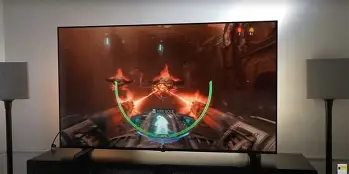
Picture Quality in Everyday Use
For streaming shows, news, YouTube, and general TV watching, both sets can satisfy the average buyer. 4K resolution, modern smart features, and wide-color marketing all help both TVs feel current. In a bright living room with lots of mixed daytime content, many viewers may not immediately notice every compromise of the smaller set.
However, once the content becomes more demanding, the gap becomes easier to see. A larger and more premium-leaning TV like the U75Qg tends to offer a more convincing HDR presentation, better perceived contrast, and a more theater-like image when watching movies in the evening. Bright highlights in action films, sunsets in nature documentaries, and stadium lighting during sports broadcasts typically benefit from the stronger, bigger display.
The U65Qf can still look good, but it is more likely to feel like a “very good everyday TV” rather than a “wow” TV. For buyers who mostly watch sitcoms, reality shows, cable channels, and standard streaming content, that distinction may not matter much. For movie nights, it often does.
Gaming and Motion Handling
Gaming is one of the clearest decision points. Buyers using a PlayStation 5, Xbox Series X, or gaming PC often care about refresh rate support, responsiveness, and motion clarity. A TV in the U75Qg class is generally more attractive to those buyers because it is designed to deliver a more advanced large-screen gaming experience.
Shop the latest TVs & Home Theater picks on Amazon.
Browse Now →Real-world examples make this easier to understand:
- A player spending hours in Call of Duty, Fortnite, or racing games will care about smooth motion and low input lag.
- A sports gamer playing EA Sports FC or NBA 2K will notice how clean camera pans and player movement appear.
- A casual gamer playing story-driven titles a few hours a week may be perfectly content with the U65Qf.
If gaming matters beyond a casual level, stepping down from the U75Qg to the U65Qf may feel less like a refresh and more like a compromise.
Room Size and Viewing Distance
This is where the U65Qf has its strongest argument. Not every room benefits from a 75-inch TV. In some apartments, condos, smaller family rooms, and multi-purpose spaces, a 75-inch panel can dominate the wall and feel disproportionate. If seating is relatively close, it can even become tiring for some viewers, especially when watching lower-quality cable feeds or fast-moving sports.
In those cases, the U65Qf may actually be the better fit. A 65-inch screen is often easier to place on furniture, easier to wall-mount cleanly, and easier to balance aesthetically in a room that is not built around a home theater setup. Buyers who have recently moved, redesigned a living space, or want a less imposing screen may find the smaller size more comfortable long term.
That is not a performance upgrade, but it can be a lifestyle upgrade.
Audio and Daily Practicality
TV shoppers often talk about picture first, but many households care just as much about how easy the TV is to use and whether dialogue sounds clear without extra equipment. In practice, both models will benefit from a soundbar if the buyer wants a more cinematic experience. Neither category of TV should be expected to replace a true external audio setup.
Still, for standard living-room use, the U65Qf may be more than enough for households that mainly watch streaming series, local channels, and occasional movies. If the goal is simple, competent, no-fuss performance, it can serve well. If the goal is to recreate a more immersive movie-night setup, the U75Qg remains the stronger foundation.
Pros and Cons
Hisense U75Qg Pros
- Large 75-inch screen creates a more cinematic viewing experience
- Better suited for sports and gaming where motion handling matters
- More impactful HDR presentation for movies and premium streaming content
- Better choice for large rooms and longer seating distances
- Feels more premium in everyday use for buyers who want immersion
Hisense U75Qg Cons
- Takes up significantly more space and may overwhelm smaller rooms
- Usually costs more than a 65-inch alternative
- Can reveal poor-quality source material more easily, especially bad cable feeds
- Heavier and harder to move or mount than a smaller set
Hisense U65Qf Pros
- More manageable 65-inch size for average living rooms and bedrooms
- Good balance of features and affordability for mixed-use households
- Easier placement on furniture or smaller walls
- Strong enough for everyday streaming and TV use
- Better fit for buyers who prioritize practicality over maximum immersion
Hisense U65Qf Cons
- Does not feel like a true upgrade from a more premium 75-inch model
- Less cinematic impact for movies, sports, and gaming
- Likely weaker in advanced gaming appeal than the U75Qg
- Smaller screen reduces immersion at longer viewing distances
Who Should Keep the Hisense U75Qg?
The U75Qg remains the better choice for buyers in several common scenarios:
- They watch a lot of movies at night and care about the “big screen” feeling
- They regularly watch football, basketball, racing, or other fast sports
- They own a newer game console and want a TV that makes gaming feel substantial
- The room is large enough that 75 inches looks appropriate rather than excessive
- They would likely regret losing immersion more than they would enjoy saving space
For these buyers, switching to the U65Qf would likely feel like a step backward, not forward.
Who Might Prefer the Hisense U65Qf?
There are still valid reasons someone may prefer the U65Qf, even if it is not a true upgrade in pure performance terms.
- The current 75-inch TV feels too large for the room or furniture layout
- The household mostly streams shows and does not prioritize gaming features
- Wall space, stand width, or room design make a 65-inch TV easier to live with
- The buyer wants solid modern features without paying for a more theater-focused setup
- The TV is going into a den, guest room, upstairs lounge, or secondary family space
In those situations, the U65Qf can be the more sensible purchase. That still does not make it an upgrade in a traditional enthusiast sense, but it may be the smarter fit for the buyer’s actual needs.
Shop the latest TVs & Home Theater picks on Amazon.
View Offers →Buying Guide: What Matters Most Before Switching?
1. Measure the Room Honestly
One of the most common TV-buying mistakes is choosing with the eyes in a showroom rather than the realities of the home. A 75-inch screen is excellent when the room supports it. If the main seating is too close or the room doubles as a casual family area, 65 inches may feel more natural.
2. Think About Content, Not Just Specs
Buyers who mainly stream drama series, reality TV, kids’ content, and general entertainment may not fully exploit what the bigger TV does best. On the other hand, buyers who love 4K HDR films, live sports, and gaming usually benefit more from the U75Qg.
3. Consider Source Quality
Large TVs magnify everything, including flaws. If most viewing comes from compressed cable channels or older streaming apps, the extra size of a 75-inch set can make that content look rougher. A 65-inch screen is sometimes more forgiving.
4. Budget for the Whole Setup
The TV itself is only part of the cost. Buyers should also think about:
- Wall mounts or TV stands
- Possible soundbar upgrades
- Gaming accessories or HDMI cable needs
- Delivery and installation complexity for larger screens
A smaller TV can reduce those practical headaches.
5. Be Clear About What “Upgrade” Means
For some buyers, upgrade means better picture quality. For others, it means a TV that fits the room better, looks cleaner on the wall, and costs less to own. The answer depends on priorities. If the buyer wants stronger performance and more immersion, the U75Qg still holds the edge. If the buyer wants easier ownership and a better size for the space, the U65Qf may still be the right move.
Final Verdict
Most buyers should not upgrade from the Hisense U75Qg to the Hisense U65Qf if picture impact, gaming, and cinematic viewing are the main goals. The U75Qg is the more immersive and more compelling TV for movies, sports, and performance-focused use. Moving to the U65Qf will usually mean accepting a smaller, less dramatic experience.
However, if the 75-inch size has become inconvenient, the room is better suited to 65 inches, or the household mainly wants a dependable TV for streaming and everyday viewing, the U65Qf can still be a sensible choice. In that case, it should be viewed not as a performance upgrade, but as a practical right-size decision.
For buyers asking the question as written, the most honest answer is simple: the Hisense U65Qf is only worth moving to if the benefits of a smaller, easier-to-place TV matter more than the U75Qg’s larger and more premium viewing experience.