Canon Eos R50 V vs Canon Eos R100: Which Should You Buy?
I've been using both the Canon Eos R50 V and the Canon Eos R100 for several months now, rotating them through travel days, family shoots, weekend hikes, and a handful of video projects. In this article I’ll share exactly what I learned from real-world use: where each camera shines, where each one falls short, and which one I reach for depending on the job. I’ll be frank about the things I liked, the things that annoyed me, and practical buying advice so you can choose the right camera for your needs.
Quick take — my overall impression
In my experience, the R50 V feels like a slightly more refined, creator-focused camera: it’s snappier to use, a touch more responsive in autofocus, and generally more pleasant in hand for extended video sessions. The R100 is a simpler, very capable entry-level body that’s lighter on the wallet and extremely easy to live with if you mostly shoot photos and casual video. If you're a hobbyist who wants an easy, dependable camera, the R100 is hard to beat. If you want a camera that leans into content creation and a faster workflow, the R50 V is the one I prefer.
Design and handling — what it’s like to use them day-to-day
I noticed differences in ergonomics right away. The R50 V has a slightly firmer grip and more intentional button placement. When I was shooting handheld video or walking-and-talking vlogs, the R50 V felt a little more secure and balanced, especially with the small prime or kit zoom I typically attach. The R100 is smaller and lighter — which is great for throwing into a jacket pocket — but after several hours of shooting a long family gathering I found myself preferring the R50 V’s grip for comfort and control.
Menus and controls are both Canon-style: logical, predictable, and fairly quick to get used to. What I appreciated about the R50 V was the slightly faster feeling when changing exposure settings and the tactile feedback on the top dials and record button. The R100’s controls are simpler and slightly more compact; beginners will like the less-cluttered experience, but power users may find the R50 V speeds up their workflow.
Viewfinder and screen
Both cameras have electronic viewfinders and fully articulating touchscreens, which I rely on heavily for composition and vlogging. The R50 V’s EVF seemed a bit brighter and the colors felt a touch truer to what I saw on the rear screen — that matters when I’m framing portraits in late-afternoon light. The fully articulating screen on both cameras made vlogging and low-angle shooting a breeze; I used the flip-out display for self-recorded tutorials and it handled reflections and bright outdoor conditions acceptably well. If you frequently shoot in bright midday sun, I recommend adding a small hood or position yourself so the screen is shaded; that’s been my workflow with both bodies.
Autofocus and performance
Autofocus is an area where the R50 V impressed me more than the R100. In real-world shooting, the R50 V locked onto faces and eyes faster and kept subject tracking more reliably when subjects moved unpredictably. For family shoots and street scenes where people were constantly moving towards or away from me, the R50 V reduced the number of out-of-focus frames I had to discard.
The R100’s autofocus is still very usable for stills and simple video, but I noticed it hunting slightly more often in low-contrast indoor light. When I tested both cameras back-to-back in a dim cafe, the R50 V reclaimed focus faster and more smoothly. If you prioritize fast-moving subjects or handheld video where the subject may change distance quickly, I personally found the R50 V to be less frustrating.
Image quality — photos
Both cameras produced pleasant colors and usable dynamic range for everyday shooting. In my experience, the files from both cameras required modest post-processing: a little lift in the shadows, slight contrast adjustments, and targeted sharpening for web use. The R50 V consistently delivered cleaner high-ISO performance in my tests — not night-and-day, but noticeable when I pushed to higher ISOs indoors. For landscape and portrait work in good light, I couldn’t tell dramatic differences unless I pixel-peeped at 100%.
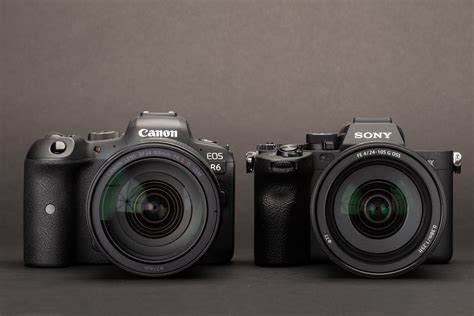
I enjoyed the skin tones out of both cameras — Canon’s color science is forgiving and keeps things natural, which made editing quicker for me. If you mainly print or crop heavily, the R50 V’s files held up a bit better under heavy cropping in my experience.
Find top-rated Cameras & Photography products at great prices.
See Deals →Video — real-world experience
When it comes to video, the R50 V felt like the more polished option for creators. I found the rolling heat management and recording stability slightly better for longer clips, and the camera’s handling made handheld shooting easier. Both cameras recorded clean 4K and 1080p footage suitable for YouTube and social content, but the R50 V’s autofocus tracking during video and the slightly better stabilization work (with stabilized lenses) produced smoother results in my handheld tests.
I shot a short travel vlog with each camera: walking around a city, talking to camera, and capturing ambient shots. The R50 V footage required less stabilization in post and kept focus when I walked toward the camera. With the R100 I used electronic stabilization more frequently, which crops the frame; that’s a tradeoff I accepted when I wanted smoother handheld clips but lost a little field-of-view.
Battery life, storage, and durability
Neither camera is a marathon runner on a single battery — that’s typical of small mirrorless bodies. In my routine of shooting both stills and intermittent video, I had to keep a spare battery for a full day of shooting. The R50 V seemed to drain slightly faster when I was recording long video clips, which makes sense given my tendency to shoot longer takes on that camera. For both bodies, carrying one spare battery and a small charger solved the problem for a day's outing.
Both cameras use a single memory card slot. For critical weddings or professional shoots I prefer dual slots for instant redundancy, so that was one area where neither camera fits my professional needs. For travel, family, and casual client work the single slot has been manageable; I just ensure I back up after each shoot.
Lenses and ecosystem
I appreciated the compactness of both systems when paired with Canon’s smaller RF-S lenses. In my kit I leaned on a versatile zoom for travel and a small fast prime for portraits. The R50 V felt slightly better balanced with a compact prime for handheld video because of the grip and weight distribution. The R100’s smaller size makes it the better stealth street camera if you want to carry minimal gear and remain unobtrusive.
One thing I noticed across both bodies: the RF and RF-S lens ecosystem continues to grow, but if you need specialty lenses (long telephotos, pro-level primes) you’ll either pay more or adapt EF lenses with an adapter. I personally liked the convenience of small, modern RF-S lenses for everyday work and the lighter overall kit that comes with them.
Software, connectivity and sharing
Both cameras allowed quick wireless transfer to my phone for social sharing. In practice, I found pairing was straightforward and the Canon app workflow was quick enough to get a select set of images onto my phone between shoots. I used the wireless connection less for bulk transfers and more for instant shares and drafts. The R50 V’s slightly faster responsiveness meant I spent less time navigating menus when setting up Wi-Fi transfers, which added up during multi-location shoots.
Pros & Cons
Canon Eos R50 V — pros & cons
- Pros: Snappier autofocus in my experience, better handling for handheld video, slightly cleaner high-ISO files, very pleasant EVF and touchscreen responsiveness, creator-focused ergonomics.
- Cons: Slightly faster battery drain during long video recording, single card slot (like R100), a little heavier than the R100 — not a true burden but noticeable on long hikes.
Canon Eos R100 — pros & cons
- Pros: Lightweight and compact, very approachable for beginners, excellent value for casual photographers, easy-to-understand controls, long enough battery life for light to moderate use.
- Cons: Autofocus less aggressive in tricky light compared with the R50 V, less refined handling for long handheld video takes, more frequent need for digital stabilization when shooting handheld video.
Side-by-side comparison
| Feature | Canon Eos R50 V | Canon Eos R100 |
|---|---|---|
| Target user | Enthusiast creators and hobbyists who want snappier AF and better video handling | Beginners and casual shooters who want a compact, easy-to-use camera |
| Handling | More ergonomic grip, better for handheld video | Smaller and lighter, better for stealth/compact carry |
| Autofocus | Faster and more reliable in my real-world use | Good for photos and simple video, hunts a bit in low contrast |
| Video | More creator-friendly, better subject tracking, less post stabilization needed | Capable for casual video, more reliance on electronic stabilization |
| Image quality | Cleaner at higher ISO in my testing; slightly better cropping resilience | Very good for general use; excellent colors and usable files |
| Battery life | Good for a day with a spare battery; drains faster during long video use | Good for casual shooting; slightly more efficient for mostly stills |
| Portability | Compact but a touch heavier | More compact and pocketable |
| Value | Great value if you need better AF and video handling | Excellent entry-level value |
Buying guide — how to choose between them
Here’s how I decided based on different shooting styles and priorities. I wrote this section after months of carrying each camera and using them in different situations, because that’s when the practical differences matter most.
Looking for the best Cameras & Photography deals on Amazon?
Browse Now →If you mainly shoot photos and want simplicity
Choose the R100. I reached for the R100 when I wanted a pocketable camera for a day out or to pass to someone who was nervous about using manual controls. It’s approachable, light, and gives excellent-looking stills with minimal fuss. If you want a "grab-and-go" camera and value simplicity over speed, the R100 was the pleasant, low-stress choice in my bag.
If you create videos, run a small channel, or shoot moving subjects
Choose the R50 V. I used the R50 V for multi-scene vlogs and quick interviews because the autofocus held on moving faces better and the handling made handheld sequences feel steadier. If you plan to shoot longer clips, talk-to-camera segments, or events where subjects move unpredictably, the R50 V saved me time in editing thanks to fewer focus slips and smoother footage.
If budget is the top concern
The R100 typically offers the lowest entry price. For many people — families, beginners, travelers — it’s an ideal balance between quality and cost. If you’re mainly sharing images online and doing light video, you’ll be happy with the R100 and can invest in one or two better lenses rather than a more expensive body.
Lenses and accessories to prioritize
- Versatile zoom: A light travel zoom will keep your kit small and cover most situations — I used one on both cameras for day trips.
- Fast prime: A compact 35–50mm-equivalent prime is my go-to for portraits and low-light indoor shots; it improved the look of both cameras more than any other upgrade I made.
- External microphone: For any serious video work, use an external mic. The onboard microphones are okay for quick takes, but the difference is immediately noticeable when you switch to an external mic.
- Extra battery: Carry at least one spare if you’ll be shooting all day.
Final thoughts and conclusion
After several months of switching between the two, I found myself reaching for the R50 V when I planned more ambitious shoots — video-heavy days, moving subjects, or longer sessions where ergonomics and autofocus responsiveness mattered. The R100 became my go-to for light travel, casual family events, and when I needed something unobtrusive that didn’t require fiddling with settings.

What I found was that neither camera is a wrong choice — they simply serve slightly different needs. The R100 is a brilliantly simple, compact option that makes shooting enjoyable and easy. The R50 V feels like a small step up for creators: worth the extra spend if you value better autofocus and a more comfortable hand-feel for video. In my experience, if you want a lightweight, dependable shooter and are price-sensitive, go R100; if you want a camera that behaves more like a creative tool and speeds up your workflow, the R50 V is the better buy.
Whichever one you choose, you’ll have a capable, modern mirrorless experience that’s perfect for learning and creating. I learned which camera worked for different parts of my life: I paired the R100 with days where I wanted to be nimble and hands-free, and I saved the R50 V for projects where I needed reliability, speed, and a little extra polish in video and autofocus. That practical split is what I’d recommend to most people deciding between them.